
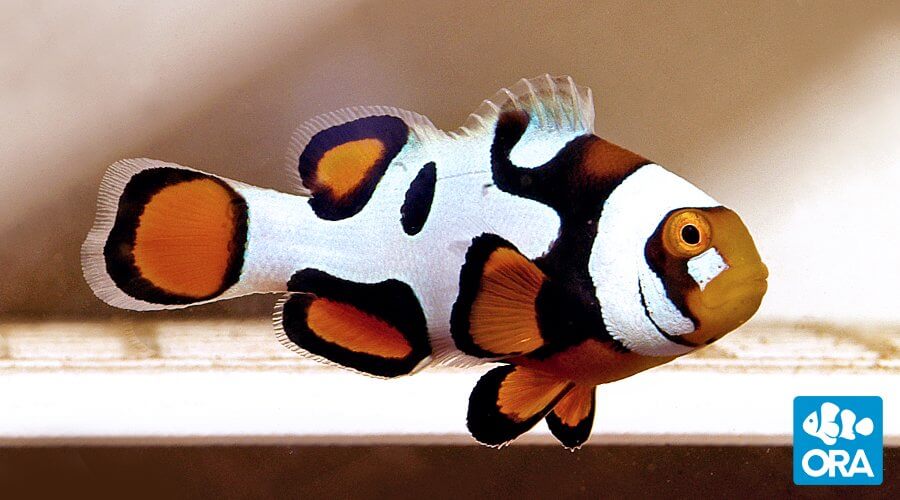
If the Snowflake is the “classic” designer fish, the Picasso Clownfish is the true artist of the family. Known for its bold, high-contrast markings and puzzle-like patterns, the Picasso has become one of the most sought-after fish in the saltwater hobby.
While they look similar to Snowflakes and DaVinci clownfish at first glance, the Picasso carries a different lineage and a distinct look that sets it apart as a “collector’s item” for reef enthusiasts.
https://www.orafarm.com/blog/2016/11/18/bring-home-the-original-ora-picasso/ -> Picasso photo (put further down page?)
Picasso vs. Snowflake: What’s the Difference?
It is a common mistake for beginners to mix these two up, but they are actually different species:
- The Species: The Snowflake is an Ocellaris variant. The Picasso is a True Percula variant (Amphiprion percula).
- The Pattern: While Snowflake Clownfish have “jagged” or “frosted” edges, Picassos are known for “jigsaw” or “puzzle” markings. In a Picasso, the white bars often stretch out and connect to one another in thick, bold shapes.
- The Eyes: If you look closely, True Perculas (Picassos) typically have bright orange irises, whereas Ocellaris (Snowflakes) have darker, black-dominant eyes.
Understanding the Picasso Grading System
Because Picasso patterns are so variable, breeders often “grade” them based on the amount of white coverage and how the stripes connect:
- Standard Picasso: These fish have extra white markings that break the standard three-stripe rule, but the stripes don’t necessarily connect.
- Premium / Grade A Picasso: These are the “show” fish. To be a Premium Picasso, the white must connect between at least two of the three stripes on both sides of the fish. The highest grades will also be mostly black and white with little orange and feature unique patterns and “helmets” – white markings extending to the fish’s head.
- Platinum Picasso: Often just called a Platinum Clownfish. This is the extreme end of the spectrum. These fish are almost entirely white, with color usually only visible on the fins and face.
Origins: The ORA Legacy
The history of the Picasso is fascinating. Unlike some designer fish that popped up in multiple places, the Picasso strain can be traced back to a single wild-caught male from the Solomon Islands.
This fish was brought to the ORA (Oceans, Reefs & Aquariums) facility in 2004 (see image below – source). Because the “Picasso” gene is somewhat rare, even two Picasso parents will only produce a small percentage of offspring with the iconic connected-stripe pattern. This rarity is exactly why high-grade Picassos often command a higher price than other designer variants.
Picasso Clownfish Care
Because they are Percula clownfish, their care is slightly different than the standard Ocellaris, though they remain very hardy. Our clownfish care guide has all the details!
Tank Requirements
- Tank Size: 15 gallons or larger is recommended.
- Temperament: Generally peaceful, but as True Perculas, they can be a bit more “bold” and territorial of their space than Ocellaris. This is especially true for large females and breeding pairs.
- Water Quality: Like all reef fish, they thrive with stable salinity (1.025) and temperature (76-78°F).
Diet & Nutrition
Picassos are enthusiastic eaters! To keep their black borders crisp and their orange centers vibrant, feed a high-quality variety of:
- Marine pellets and flakes.
- Mysis shrimp and chopped krill.
- Vitamin-enriched frozen foods.
Anemone Hosting
In the wild, Percula clownfish have a natural affinity for Carpet Anemones (Stichodactyla). In the home aquarium, they will readily host in:
- Bubble Tip Anemones (The most popular choice).
- Magnificent Sea Anemones.
- Long Tentacle Anemones.
Frequently Asked Questions
Why is my Picasso getting darker?
This is perfectly normal! As Picasso Clownfish age, the black margins around their white patterns often thicken and darken. This “filling in” of the black pigment is a sign of a healthy, maturing fish.
Can I pair a Picasso with a Snowflake?
Technically, they can pair, but they are different species (Percula and Ocellaris). Their offspring may be known as “Mocha” or “Black-Ice” hybrids. For the best experience, we recommend pairing them with another Percula. To learn about the differences in these species, check out our guide on The Difference Between Ocellaris and Percula.
Are Picasso Clownfish aggressive?
They are generally peaceful, but like any artist, they like their personal space! They may defend their “host” (anemone or coral) more vigorously than an Ocellaris would.
Ready to add an “Original Picasso” to your reef? Visit our Designer Clownfish Types page to see how they compare to other popular variants like the DaVinci or the Storm!